
By: Ashley McCubbin
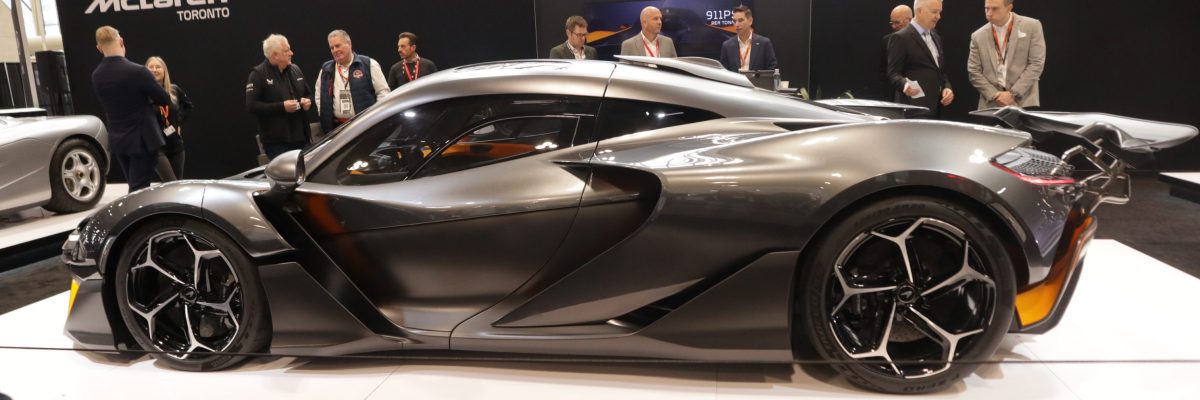
TORONTO, Ontario — McLaren made headlines when they debuted the F1 and P1. They have now made them again while showcasing their latest supercar – the McLaren W1. The newest car in their fleet made it’s North American show debut at the Canadian International Auto Show.
When it came time to begin designing the car, the manufacture focused on the four “first principles of a supercar” that define their ultimate, “1-named” cars, which are Epic Power, Performance Everywhere, Pure Driver Connection and Authentic Theatre. The design took approximately five years to come together, with certain elements of the car taking longer than that.
 Everybody knows a super car has a lot of power, and the W1 is no different in making 1275 horsepower with 1000 kg of downforce in race mode. This gives you the ability to accelerate to 200 kph in 5.8 seconds – but don’t worry, there are good brakes that allow you to stand on the brakes at that moment and stop in 100 metres.
“It’s just about the power – it’s about the weight working in combination together to deliver this performance,” McLaren Engineer Max Hunt explained in a presentation at the show. “When we wrote down the target for the W1, we knew pretty early on we were going to have to develop a completely new powertrain so it’s a 4L hybridised twin turbo V8, which might sound familiar but is in fact a ground up brand new engine.
“That allowed us to start again from the first principals as the engine is only lighter than our current BF engine, but it’s also 55mm shorter, which gives us a packaging advantage as it takes up less space in the car but also allows us to have a shorter camshaft which in turn allows us to spin the engine faster. So not only have we got the most power of any road legal car ever, but also the fastest reving engine. So it red lines at 9600 pounds.”
Despite all the power, Hunt ensures that following the principle “performance everywhere,” the car is just at home on the road as it is on the track. For instance, you can fold the headrests down and store your own and your passenger’s luggage behind the seats.
“The real kind of art though is making a car that feels fantastic, feels versitle and exciting when you’re only using 10% of the available performance and that’s definately something to achieve,’ Hunt commented.
Throughout the design of the car, there are several elements done on purpose for aerodynamics from the side pods to the front end design to control the flow of the air, and throw the turbulent air that you don’t want away. There is the ability to extend the tail of the car by 300 mm – not legal on the street, but you have that ability for when you are ready to hit the track.
Categories: Uncategorized

 News From The Pits